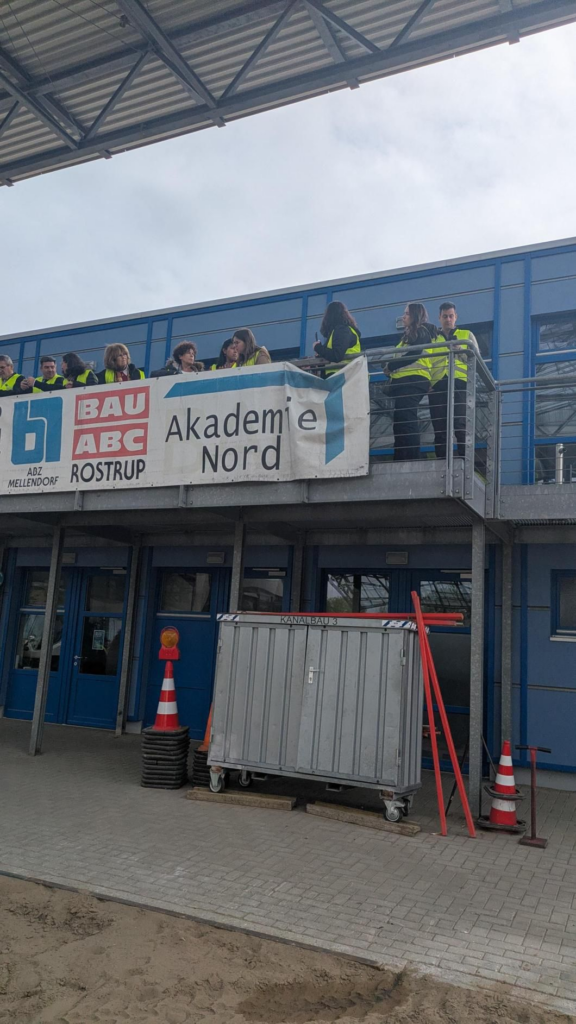

Recent WP5 sessions at BAU ABC marked a clear shift away from conceptual discussion and toward applied testing of next-generation vocational training models in the construction and sustainability sectors.
Rather than treating micro-credentials and green skills as abstract policy goals, partners focused on how these frameworks perform in real training environments, under realistic technical and assessment conditions.
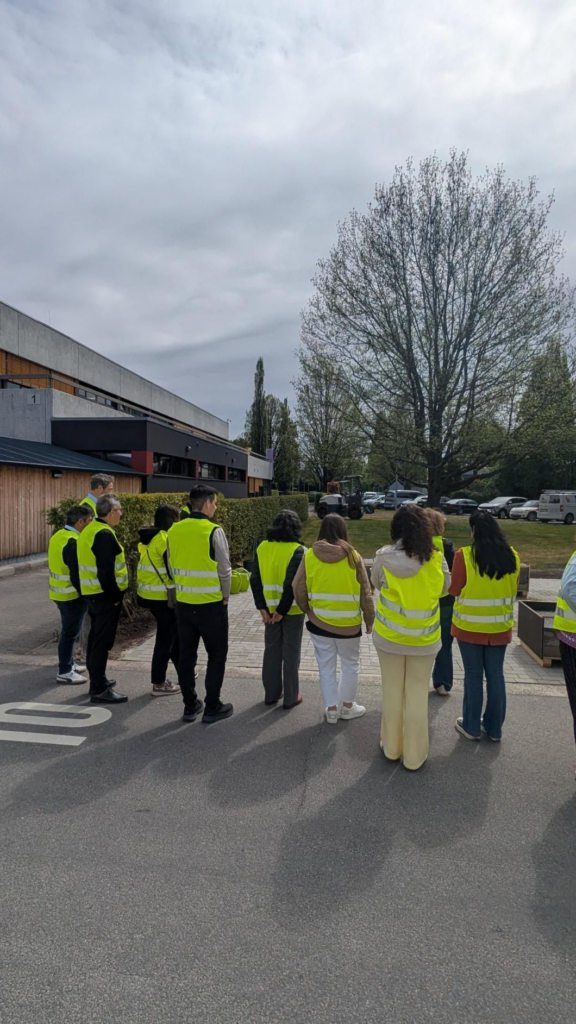
1. What was tested in practice
A series of structured, hands-on activities was used to bridge the gap between training design and field application:
A. Applied technical simulations
Participants worked on real-world inspired scenarios, including rainwater infiltration systems and sustainable paving solutions. The objective was not demonstration, but competence validation under practical constraints.
B. Competence-based assessment models
New evaluation structures were explored, shifting from traditional knowledge testing toward layered competence recognition:
- Know What (theoretical understanding)
- Know How (applied execution)
- Know Why (contextual and systemic reasoning)
C.Digital credential integration
Europass and emerging digital certification approaches were examined in live use cases, focusing on interoperability, traceability, and cross-border recognition of learning outcomes.
D. Cross-country VET exchange
Partners from different national systems compared methodologies, identifying where alignment is feasible and where structural differences still need resolution.
E. Quality assurance for scalability
A central focus was ensuring that micro-credential systems are not only valid in pilot settings, but also scalable across institutions and countries without loss of consistency or reliability.
🚀 Key outcome
The overarching conclusion from the working sessions is a structural one:
Vocational education is moving toward environmentally aligned, competence-based systems that mirror real working conditions rather than classroom abstractions.
This shift has direct implications for how skills are designed, assessed, and recognised across Europe, particularly in construction and green transition sectors where practical performance is critical.