The 3rd Transnational Webinar of the Green Circle project, entitled “Microcredentials Quality Assurance Model”, was successfully held on 22 June 2026, bringing together project partners, stakeholders and experts to discuss the role of microcredentials in supporting lifelong learning, skills recognition and professional development in the construction sector.
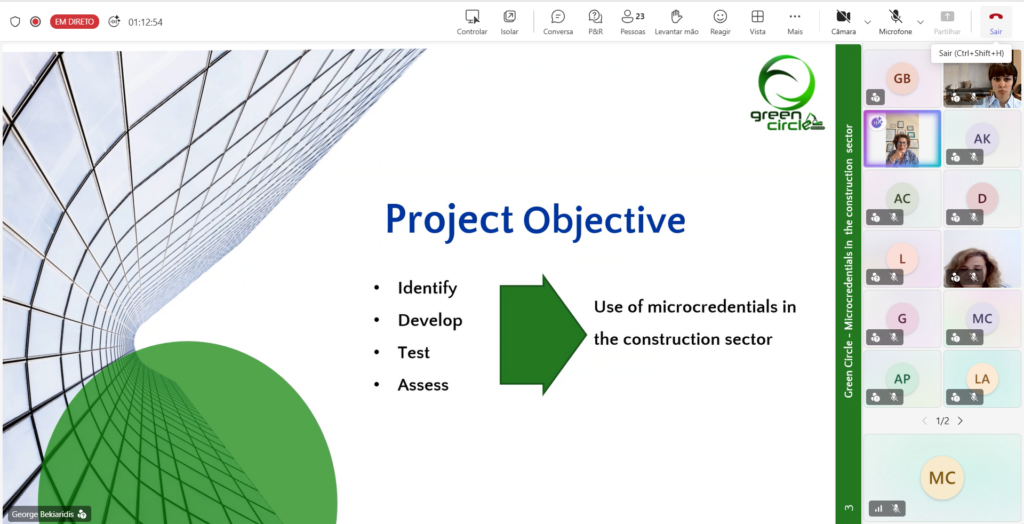
The webinar opened with an introduction by Mrs. Ana Dias from TecMinho, who presented the Green Circle project, its objectives and its work towards the development, testing and assessment of microcredentials for green skills in construction. She also referred to the project’s microcredentials ecosystem, including the strategy, taxonomy, quality assurance work and upcoming piloting activities across partner countries.
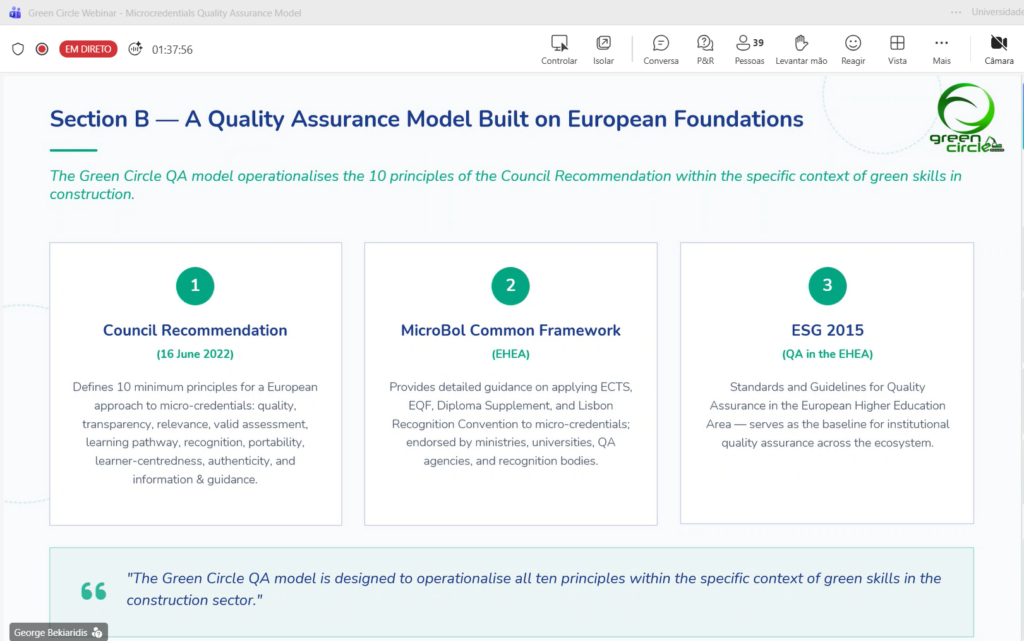
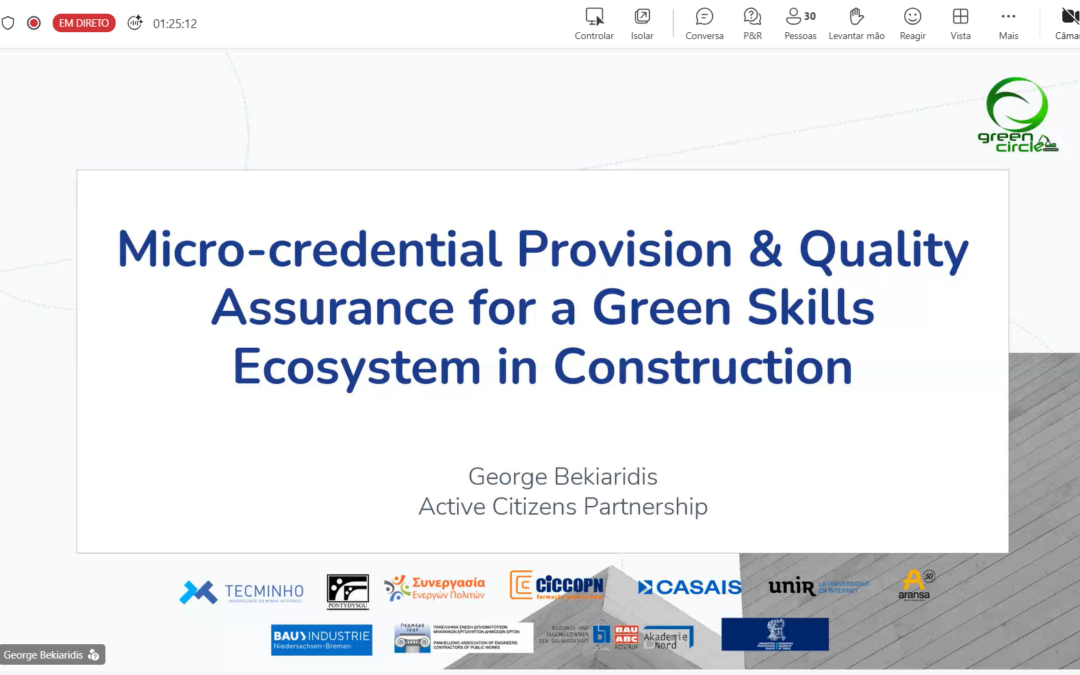
A central part of the webinar was the presentation by Mr. George Bekiaridis from Active Citizens Partnership (ACP), the lead partner of WP4, who presented the Microcredentials Quality Assurance Model designed within the project. As WP4 leader, ACP has played a key role in shaping the methodological framework, including the quality assurance rules and processes, the technical and digital design requirements for issuing microcredentials, and the selection of appropriate technologies for their creation, delivery, management and certification.
Mr. Bekiaridis highlighted the importance of developing trusted, transparent and transferable microcredentials that can respond more quickly to emerging labour market needs than traditional qualification systems, especially in a sector facing increasing green and digital skills demands. His presentation also addressed the technical requirements needed to ensure transferability and interoperability, which are essential enabling factors for scalability, flexible learning pathways and trust in the recognition of acquired skills.Furthermore, the presentation underlined the importance of recognised European frameworks and tools, such as EQF, ECTS, ESCO and Europass Digital Credentials, in supporting transparency, comparability and cross-border recognition.
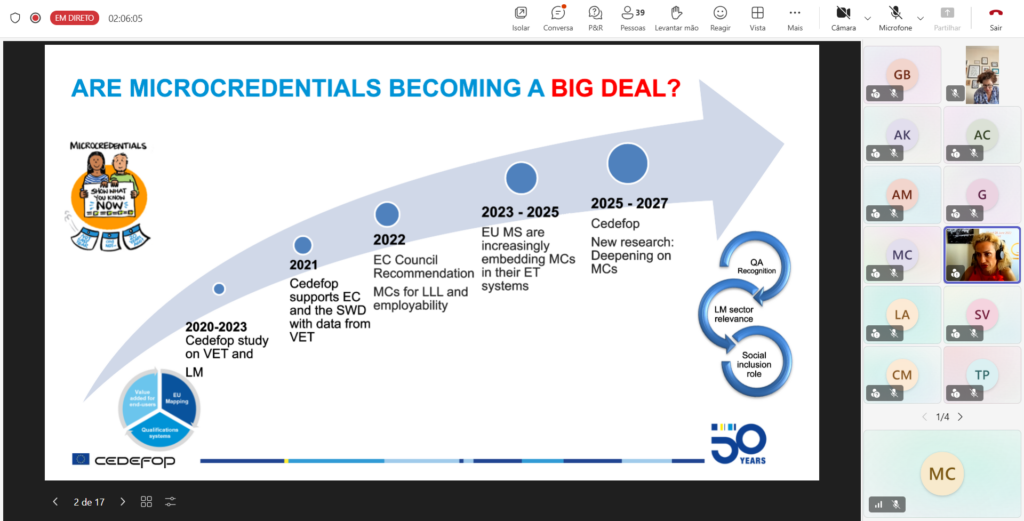
The webinar was further enriched by the contribution of Mrs. Anastasia Pouliou from Cedefop, who presented ongoing European research on microcredentials, with a focus on vocational education and training, labour market needs, quality assurance and recognition mechanisms. Her intervention connected the project’s work with wider European policy discussions and stressed the importance of clear learning outcomes, transparency, trust and stronger links with sectoral skills needs.
The session concluded with a discussion on the importance of industry involvement in the design, recognition and long-term sustainability of microcredentials. Speakers highlighted that the construction sector must be actively engaged in order to ensure that microcredentials respond to real skills gaps, support upskilling and reskilling, and offer tangible value for learners, employers and training providers.
The webinar was facilitated by Mrs. Angela Karadog from PONTYDYSGU, ensuring the smooth coordination of the session and the discussion among speakers and participants.
Overall, the webinar successfully contributed to the ongoing dialogue on how microcredentials can strengthen green skills development in construction and support more flexible, transparent and labour-market-relevant learning ecosystems across Europe.
A warm thanks to all speakers, participants and stakeholders for their valuable contribution to the discussions!